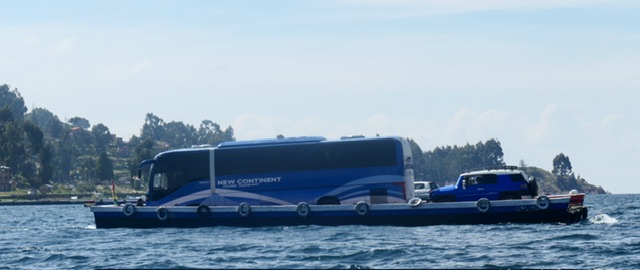
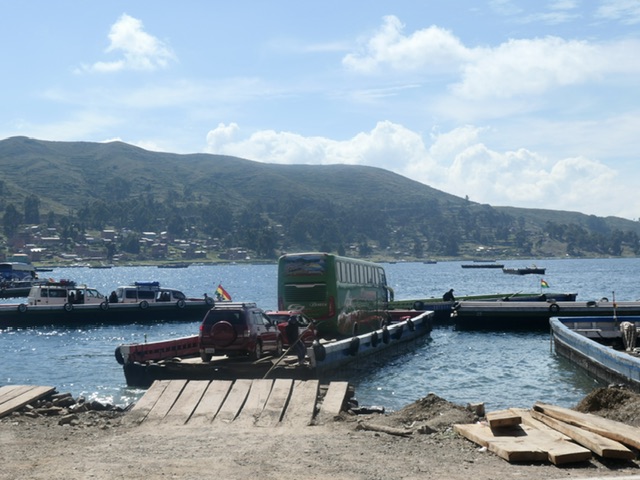
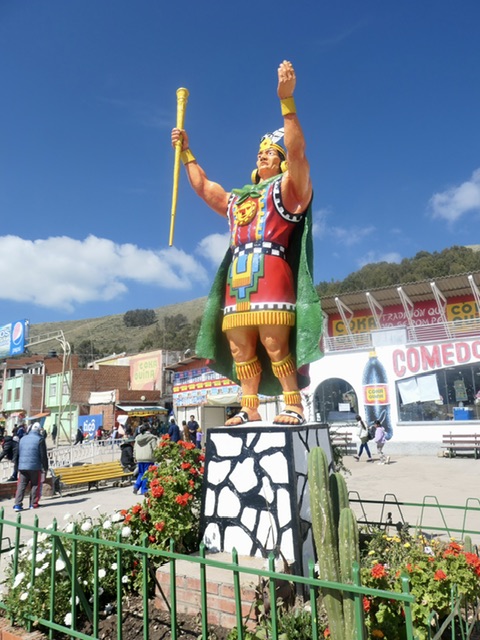
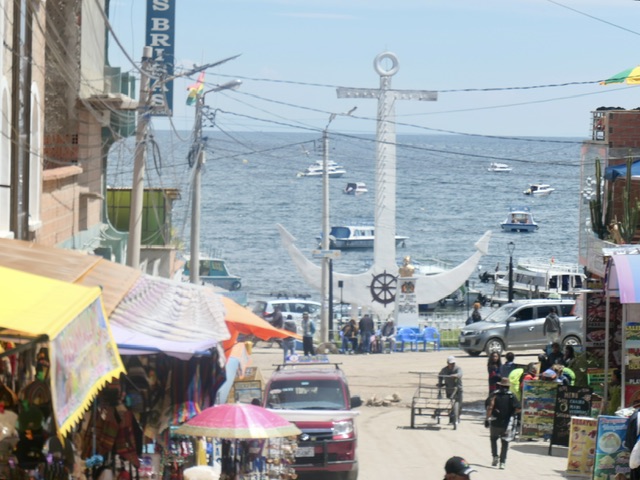
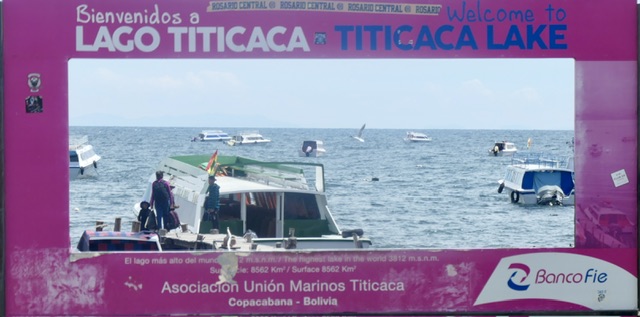
It’s a 4 hour journey between La Paz and Copacabana on the shore of Lake Titicaca. Once out of the extensive urban/suburban area, the farming region becomes scenic and on a clear day (which we did not have), several of the highest mountains in Bolivia are visible. About 3 hours after La Paz, there is a ‘ferry’ crossing that involves people going onto small boats and buses/cars going onto barges.
As it takes only 10 mins for the people boats to cross, we have a 20-minute wait before our bus arrives to drive the very scenic last hour to Copacabana.
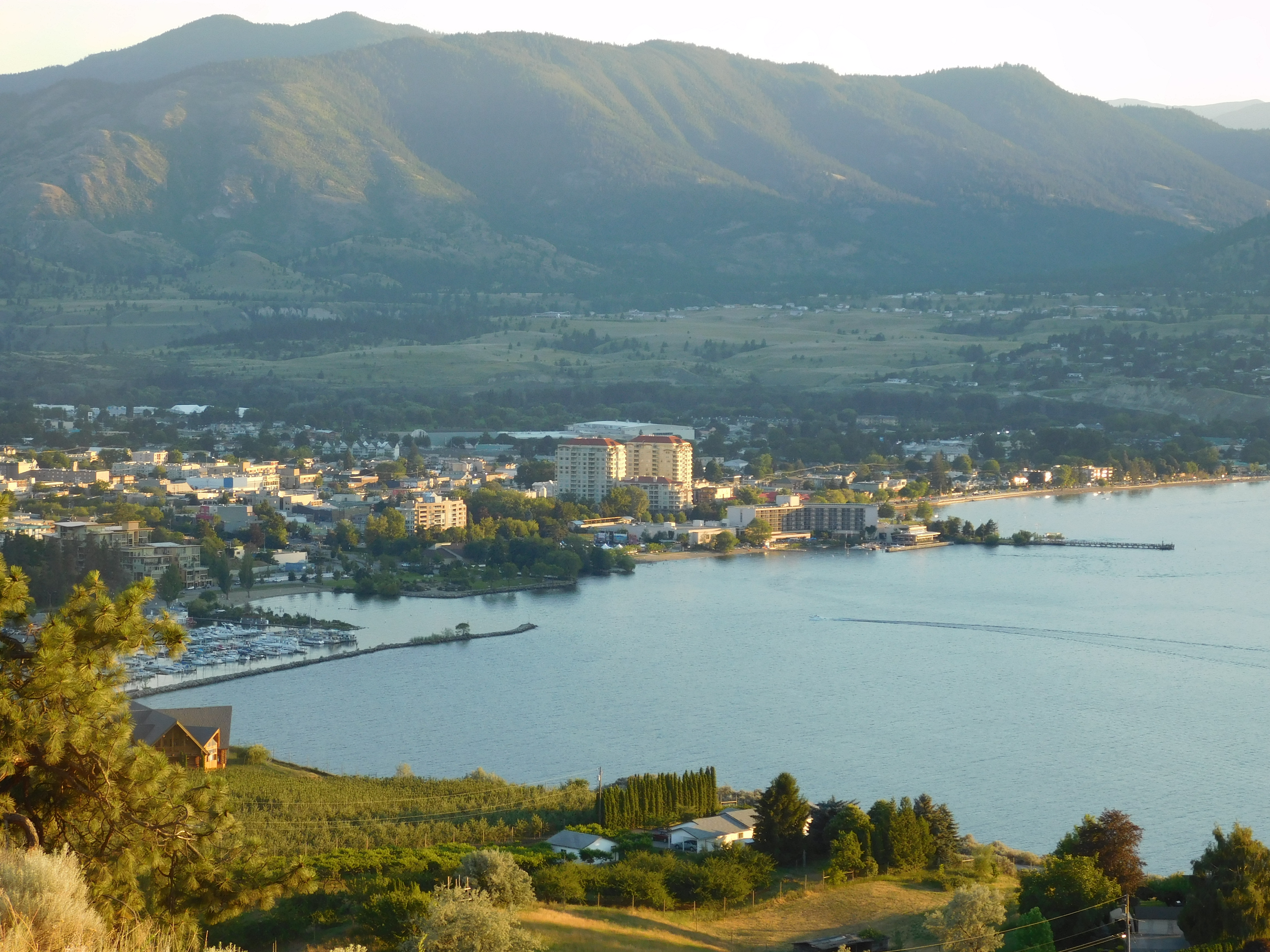
The shores of Lake Titicaca is the closest type of beach vacation that Bolivia can offer, and the area around Copacabana is filled with holiday homes, water activities, and beach-style eateries. We imagine the area to be full of activity in summer.
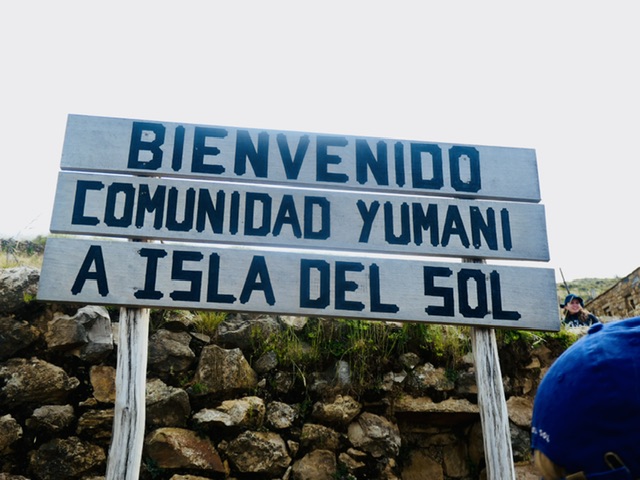
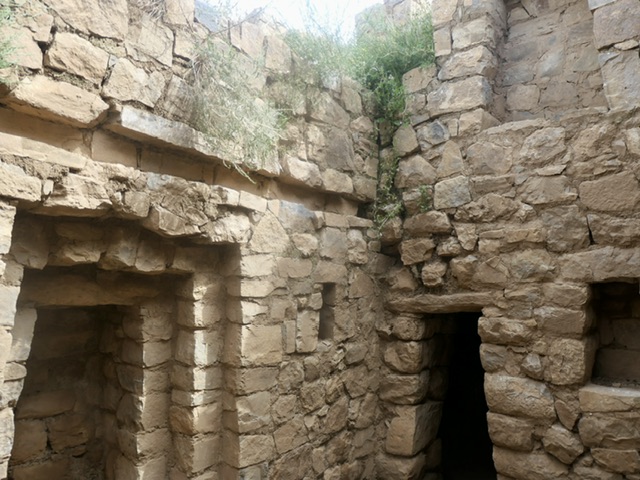
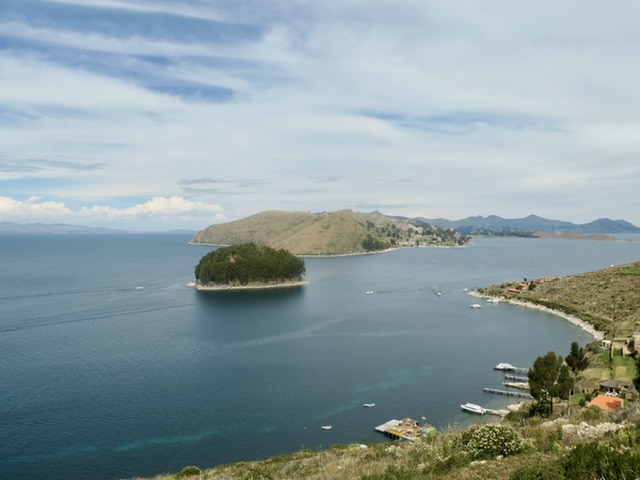
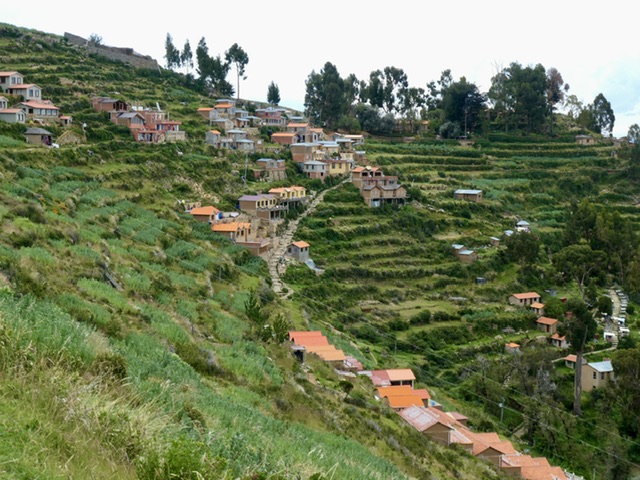
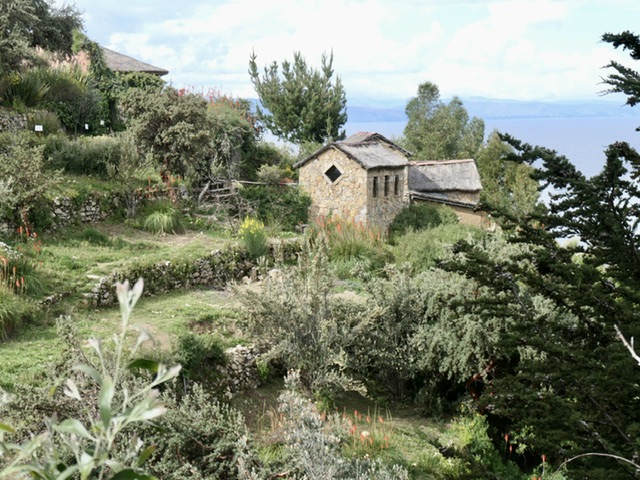
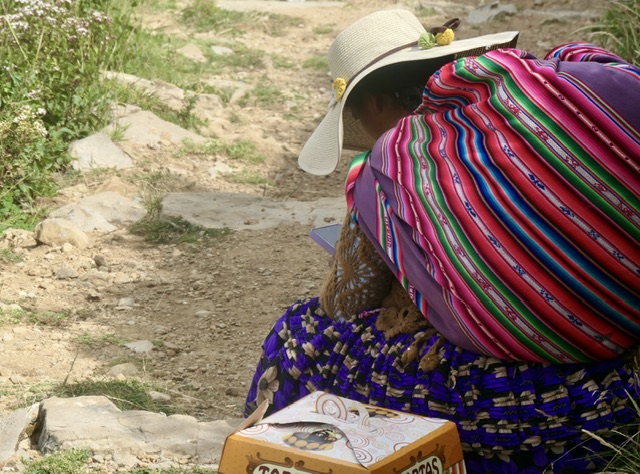
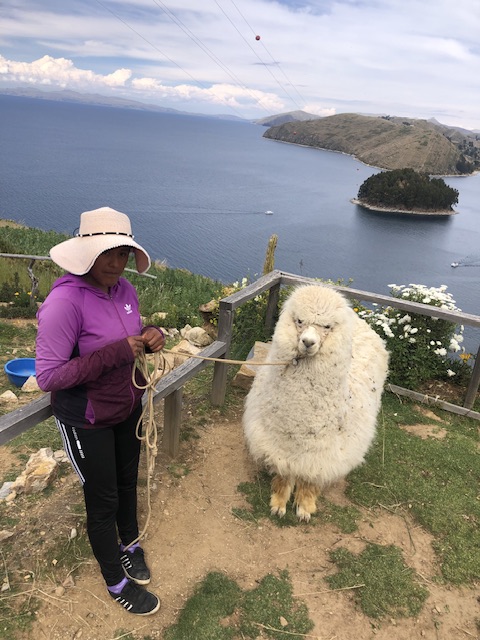
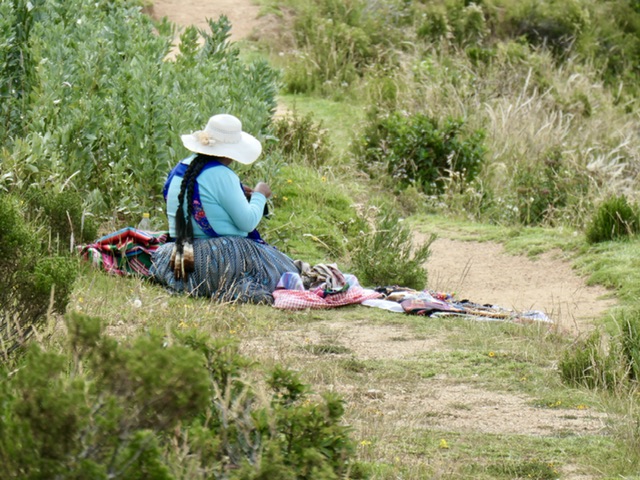
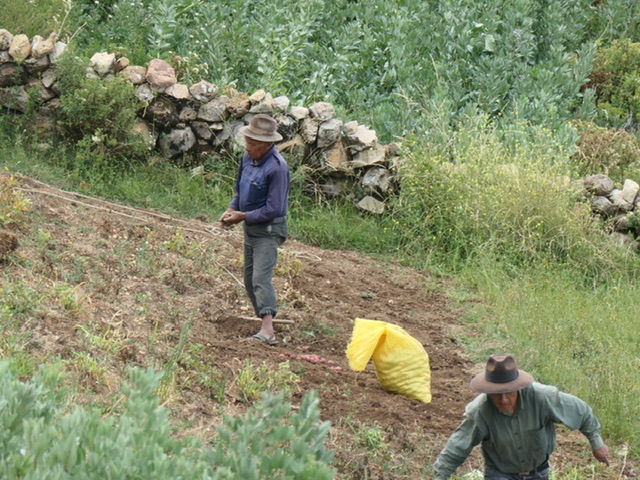
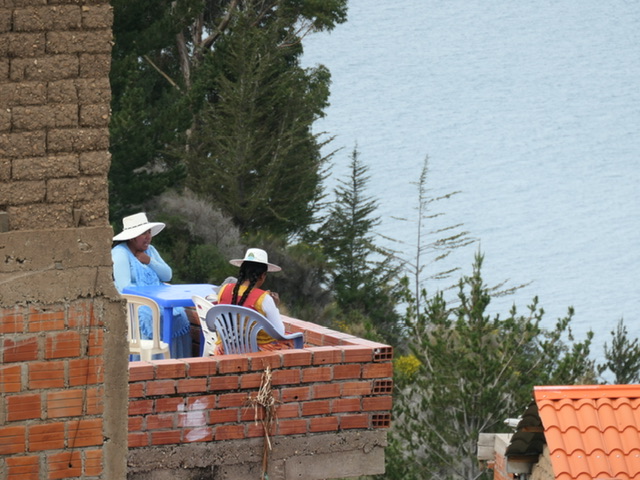
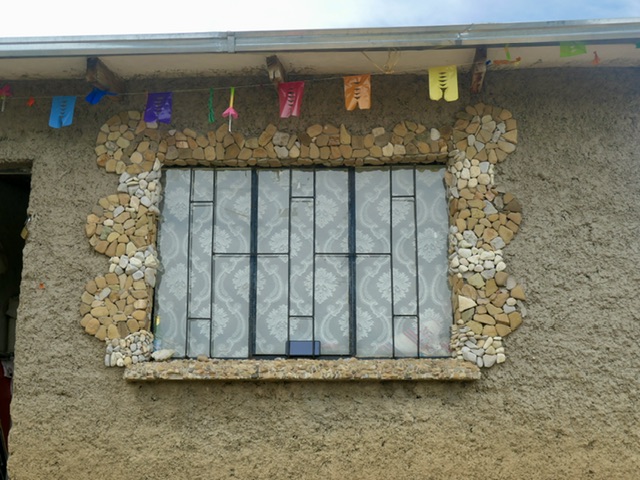
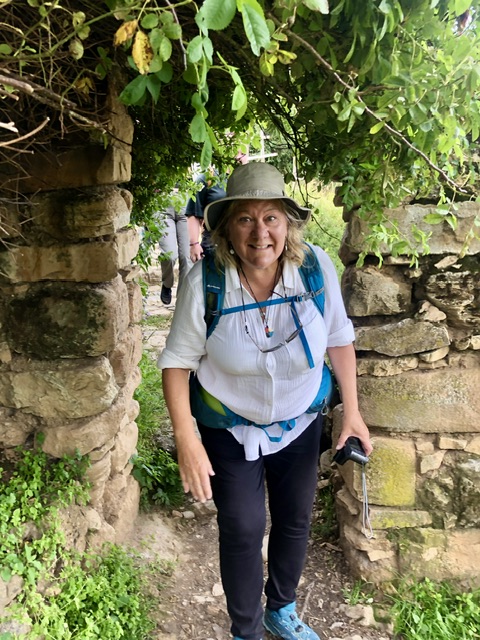
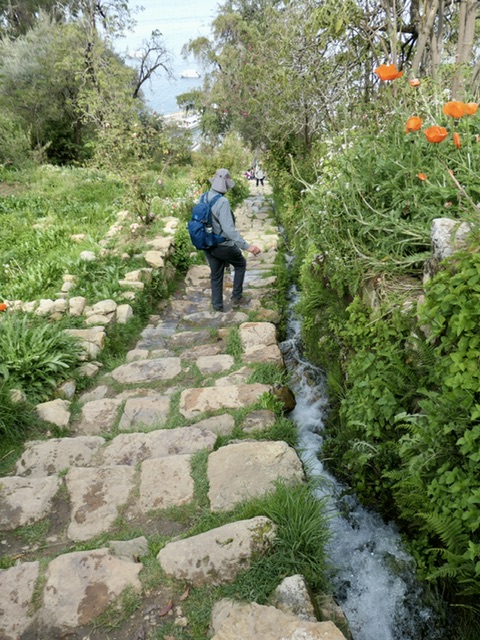
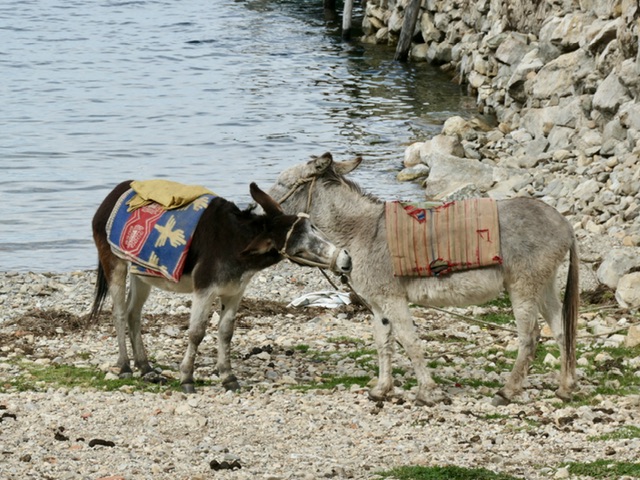
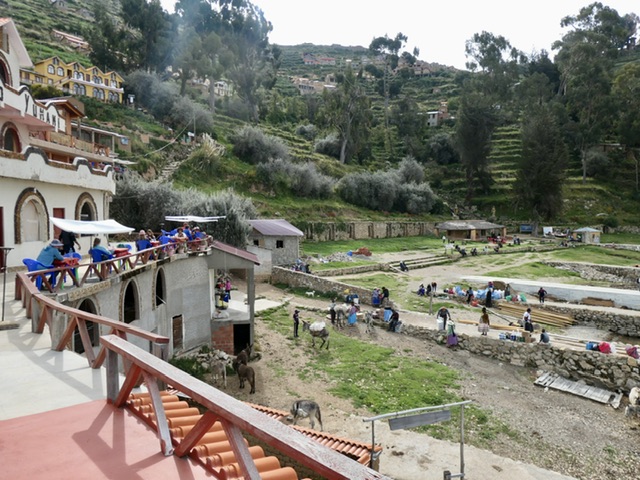
More importantly, this is the access point to and from the islands and we had booked a 4-hour excursion to Isla del Sol. It is the most inhabited island and also the most visited by tourists. We were dropped off in one port and took the option of hiking about 45-minutes over a high ridge and down a long flight of Inca stairs to another port. This was high-elevation hiking as Lake Titicaca is at 4000 metres above sea level. The island is lush; the Yamani people are proud of their work and their homes; and there are homestays and rooms available for those who might want to visit longer. We saw the remains of the Sun Temple and the activities of daily life (work & play), burros on steep paths, and a gentle hubbub in the port area. We could not avoid drawing comparisons to Santorini (Greece).
Sun Temple ruins
Hiking Views
Yumani People
Navigating the Inca Trail
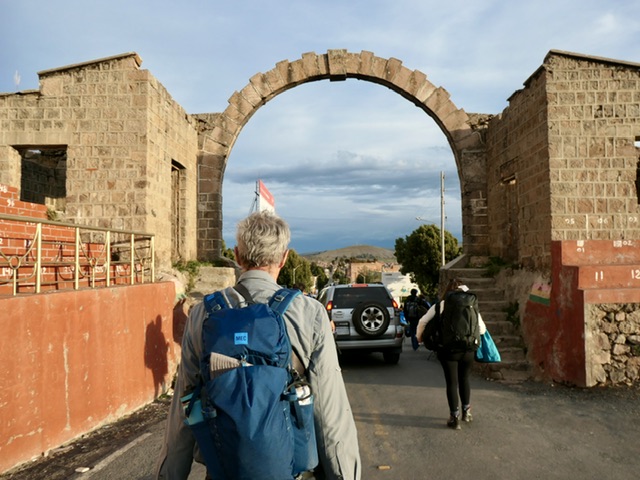
After a 15-min bus ride to the border, we stamp out of Bolivia, then walk a few blocks on a dirt road to be stamped into Peru, resuming our journey on a new bus. Will we arrive in Puno after a few hours.
PUNO
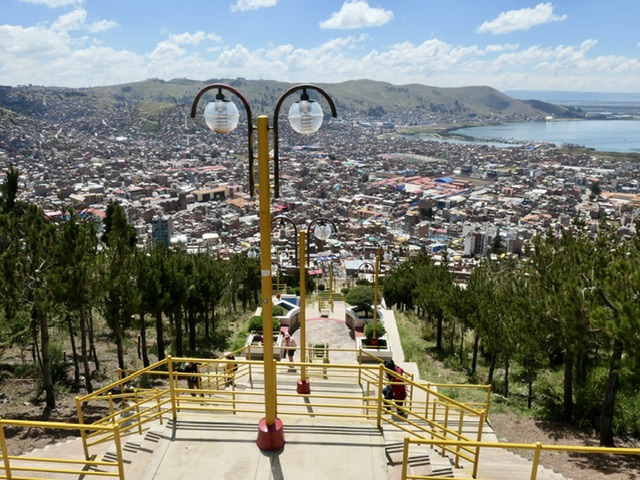
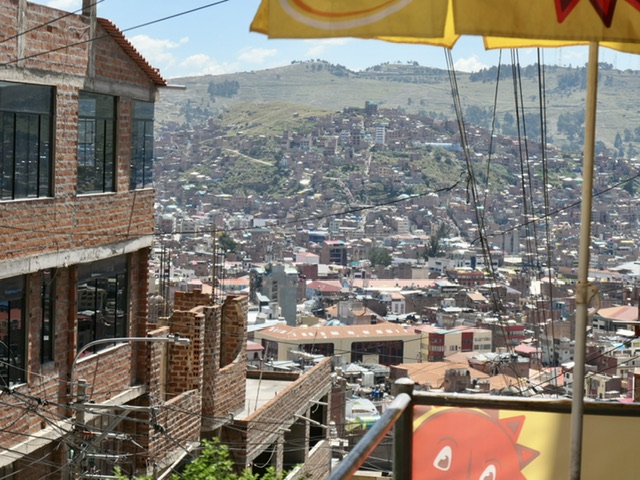
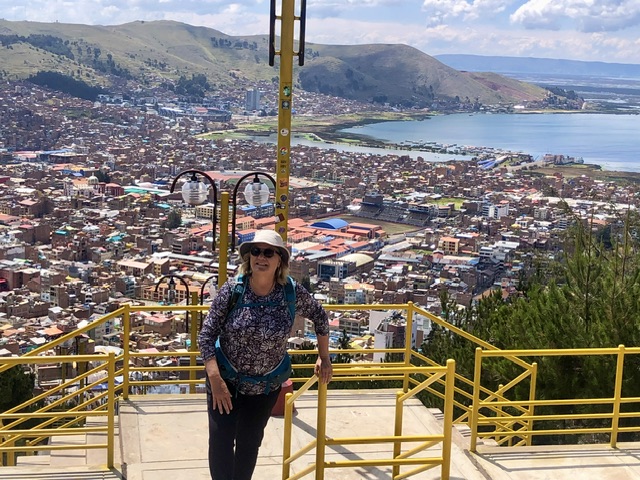
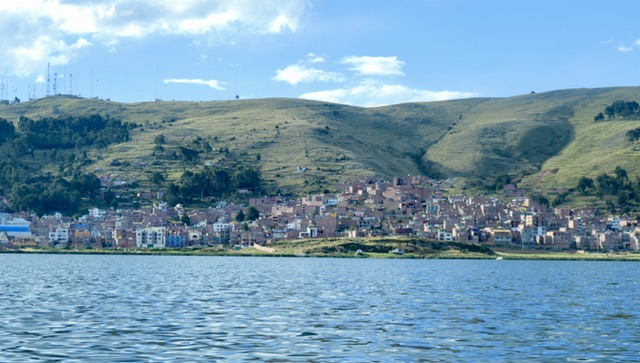
We had no idea that we were going to a city of 200,000 in a bay rising high above the lake. We split our explorations between a climb to a mirador, walk around the central plaza, and a tour to the Uros Islands (reed islands).
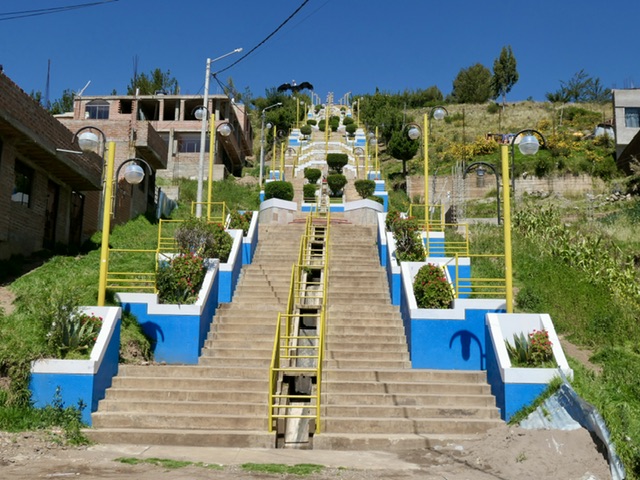
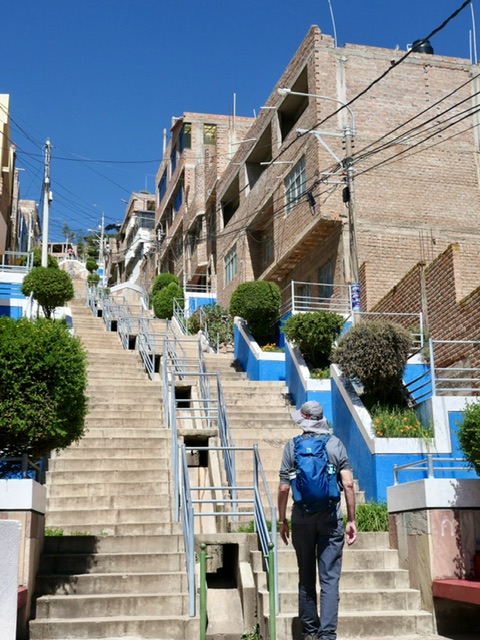
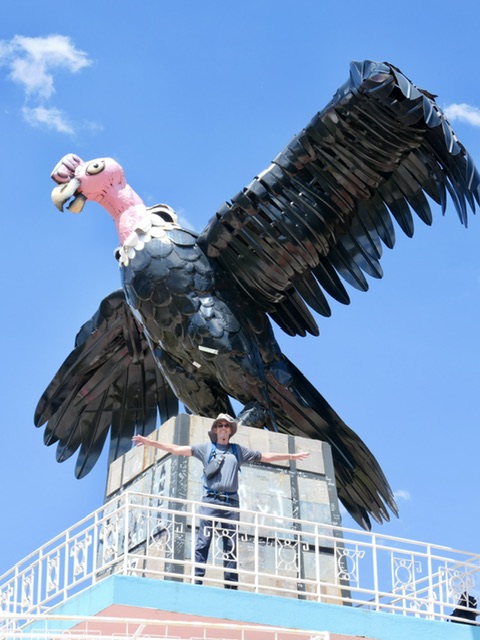
Mirador del Condor
651 steps to the viewpoint, but first several blocks of walking up steep & narrow roads to get to the base of the stairs. As it was Sunday, it was rather peaceful – we could hear our laboured breath!
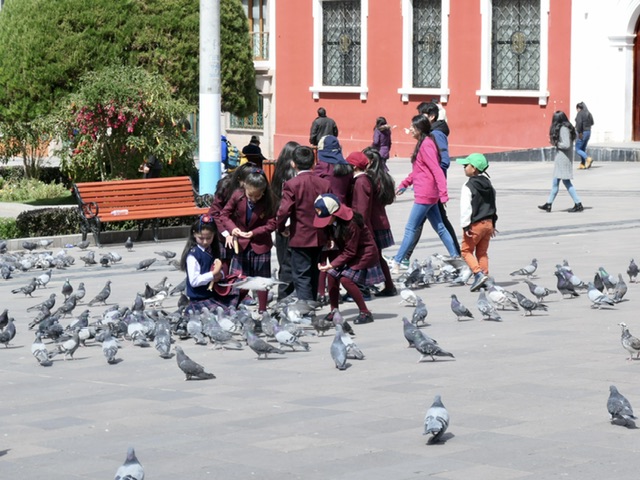
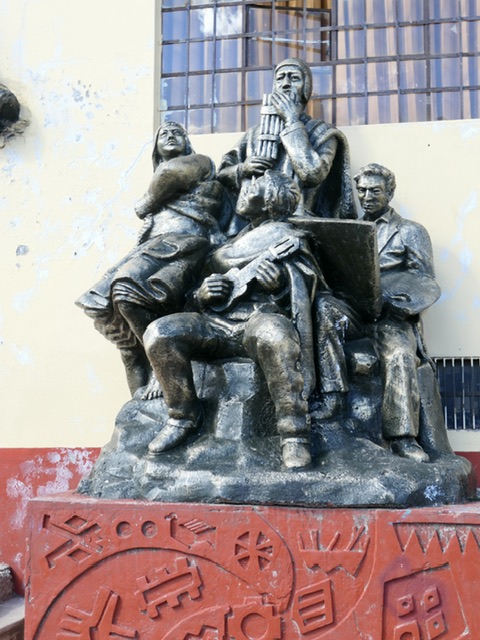
Centro
Children playing, pigeons, European style coffee house, alpaca shops, and the search for a money exchange.
Uros (reed islands)
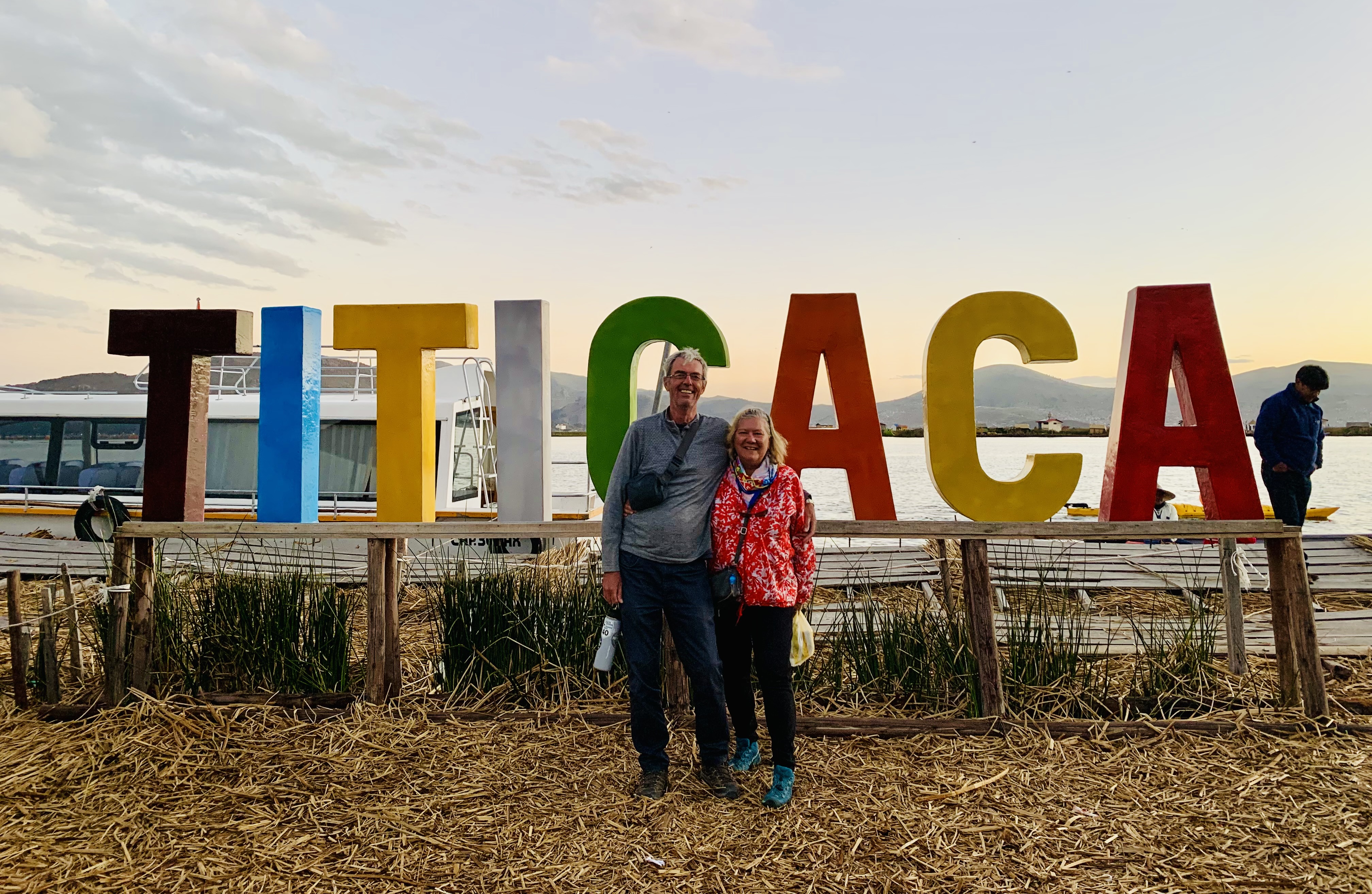
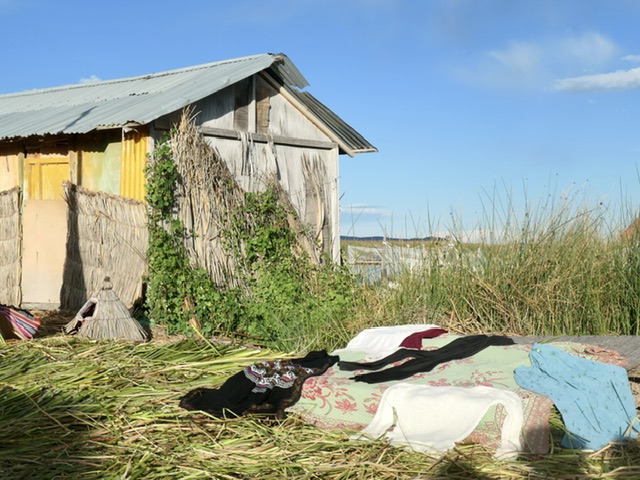
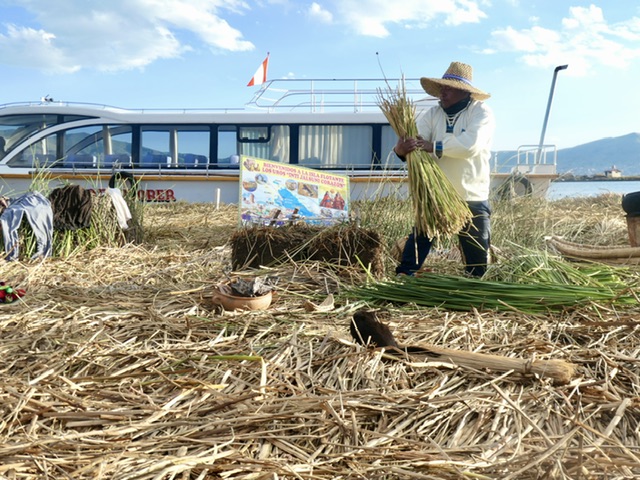
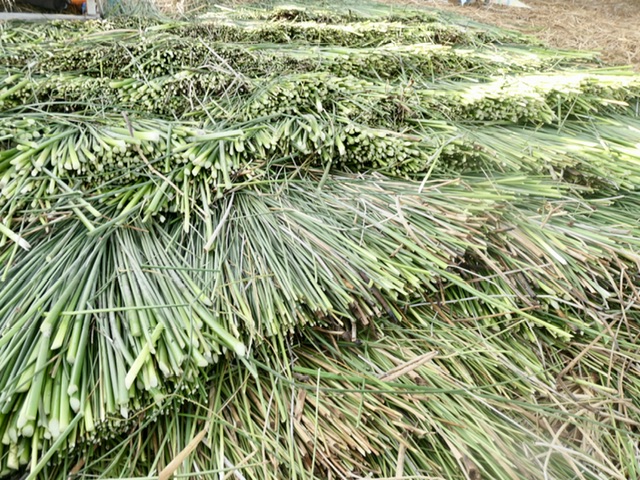
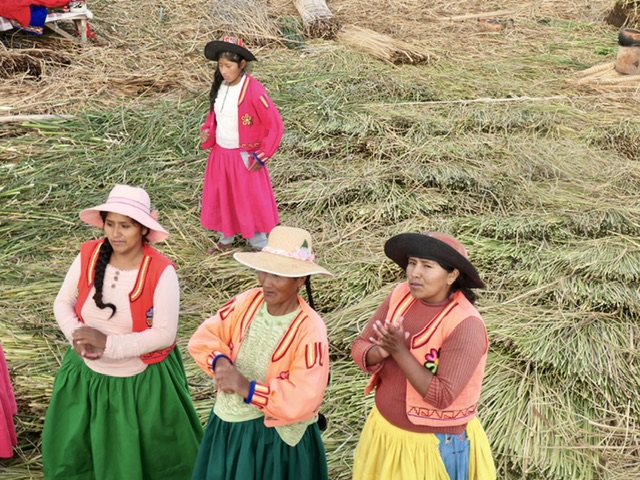
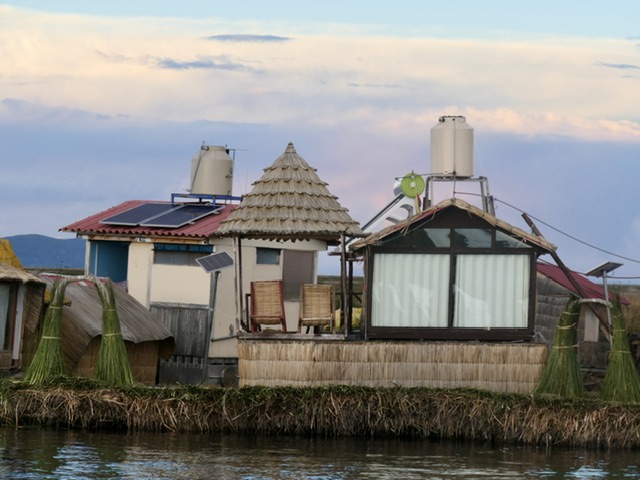
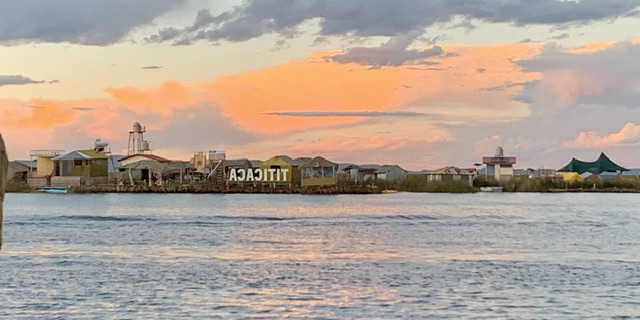
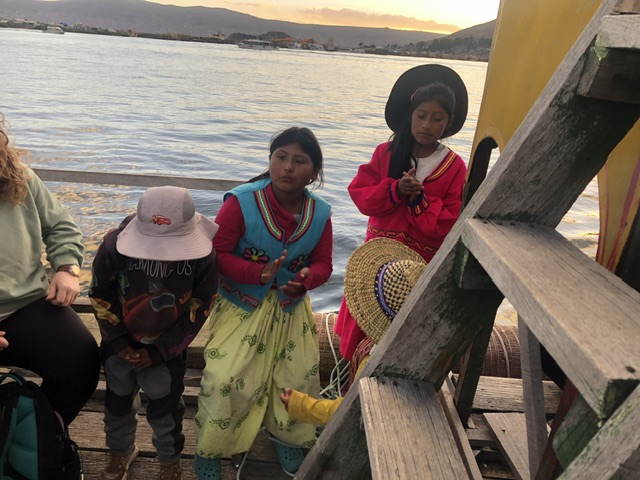
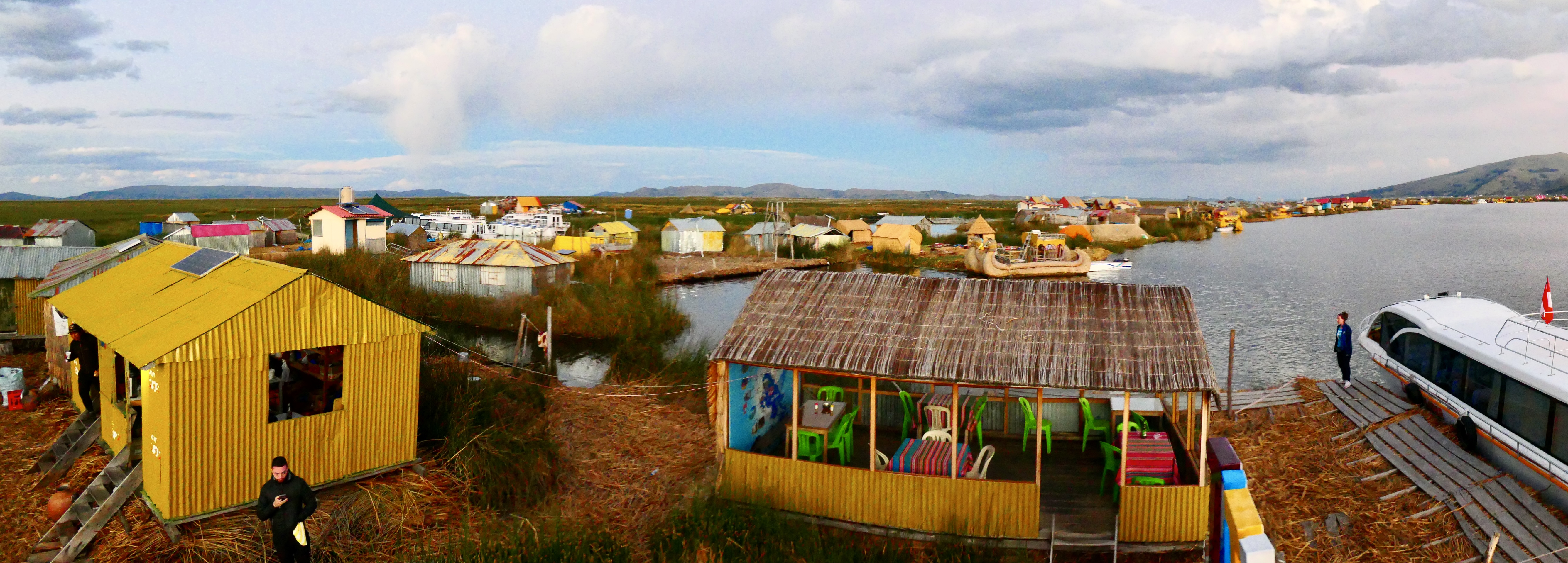
A 30-min boat ride from Puno harbour lies the Uros community: about 1500 residents that live on approximately 145 islands made of reeds. Tourism is now their main form of income as the boat tours visit different islands on a rotation system. Our short tour included a demonstration of how the plant material is used to create the floating islands, as well as many of the houses and structures on them. While the reed island people have been around a long time, self-sustaining on Lake Titicaca, the modern community has harnessed the power of tourism, with their main mission to collect dollars by pressure-selling their wares, giving rides in a reed boat, and encouraging their children to sing for donations. While we enjoyed the history and seeing the traditions up close (and the preservation of the local language), we felt very ‘tourist-trapped.’
The remainder of our time in Peru will involve making to Arequipa, then to Cusco, where we are booked for the 5-day Salkantay trek to Machu Picchu. After that , who knows?

































 Never a Dull Moment